
.jpg?width=1200) Photo: Arian Zwegers, CC BY 2.0, via Wikimedia Commons
Photo: Arian Zwegers, CC BY 2.0, via Wikimedia CommonsFour ways into the same mountain kingdom.
Pick the door that matches how you want to feel when you land back home — moved by living faith, immersed in centuries-old craft, restored in body, or closer to a landscape most of the world will never see.
Walk to the monastery, then sit still in it.
You don't need to be Buddhist to feel something shift on the climb to Tiger's Nest, or in the hour a monk spends explaining why the mask dance you're watching matters. These journeys are built around access — to teachers, to quiet spaces, to time.
_(15841919411).jpg?width=800) Photo: Arian Zwegers, CC BY 2.0, via Wikimedia Commons
Photo: Arian Zwegers, CC BY 2.0, via Wikimedia CommonsTiger's Nest & the Sacred Valleys
You'll begin in Paro, at the base of a cliff you've probably seen in a photo somewhere — and then you'll climb it yourself, slowly, with tea-house stops, until Paro Taktsang appears at eye level. From there: Thimphu's memorial chorten at dawn with local worshippers circling it, a private audience with a resident lama in Punakha, and a night in a farmhouse where the family still lights butter lamps before dinner.
Arrive Paro, blessing ceremony
Land at Paro International Airport; afternoon walk through Paro town and a short blessing ceremony at a local temple to open the trip.
Tiger's Nest (Paro Taktsang) hike
4–5 hour round trip hike to the cliffside monastery, 900m above the valley floor; horse option available to the halfway café.
Thimphu — memorial chorten & monastic school
Morning circumambulation with locals, visit to a monastic school, afternoon with a Buddhist scholar for Q&A.
Dochula Pass & Punakha Dzong
108 memorial chortens at 3,100m, then Punakha Dzong at the confluence of two rivers — Bhutan's most sacred fortress.
Private audience with a lama
Guided meditation session and a personal audience arranged in advance with a resident lama (subject to availability).
Farmhouse stay, Punakha Valley
Overnight with a local family; traditional hot-stone bath included.
Departure
Transfer to Paro for your onward flight.
Silent Meditation Retreat, Bumthang
For travellers who want fewer sights and more stillness. Bumthang's valleys hold some of Bhutan's oldest temples; this retreat trades a packed itinerary for guided sitting sessions, walking meditation between temples, and a digital-detox lodge with no in-room screens.
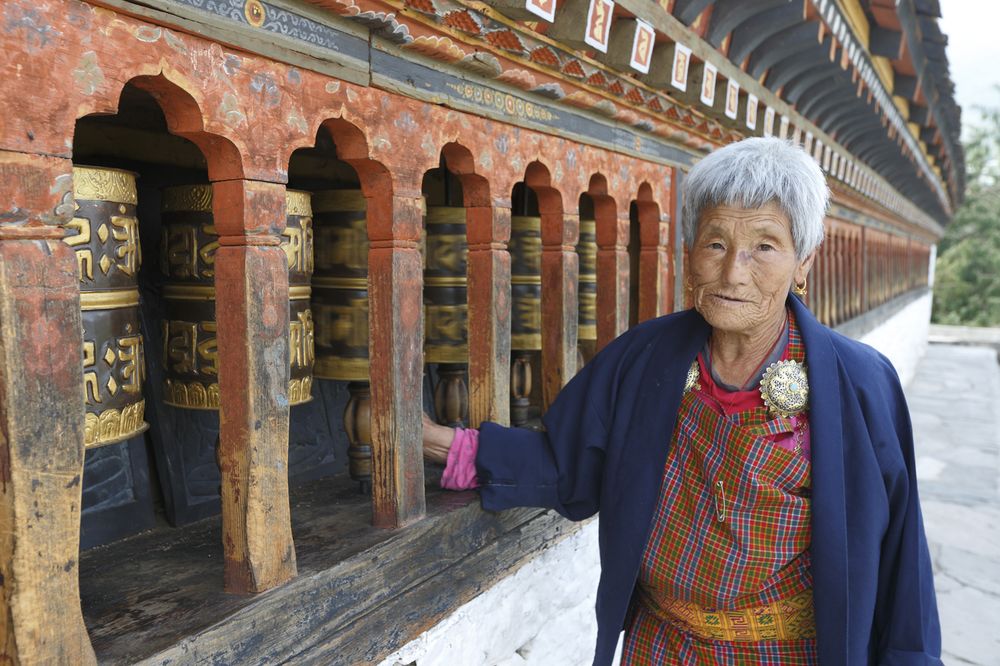
Bhutan's culture isn't in a museum — it's the neighbour weaving on her porch.
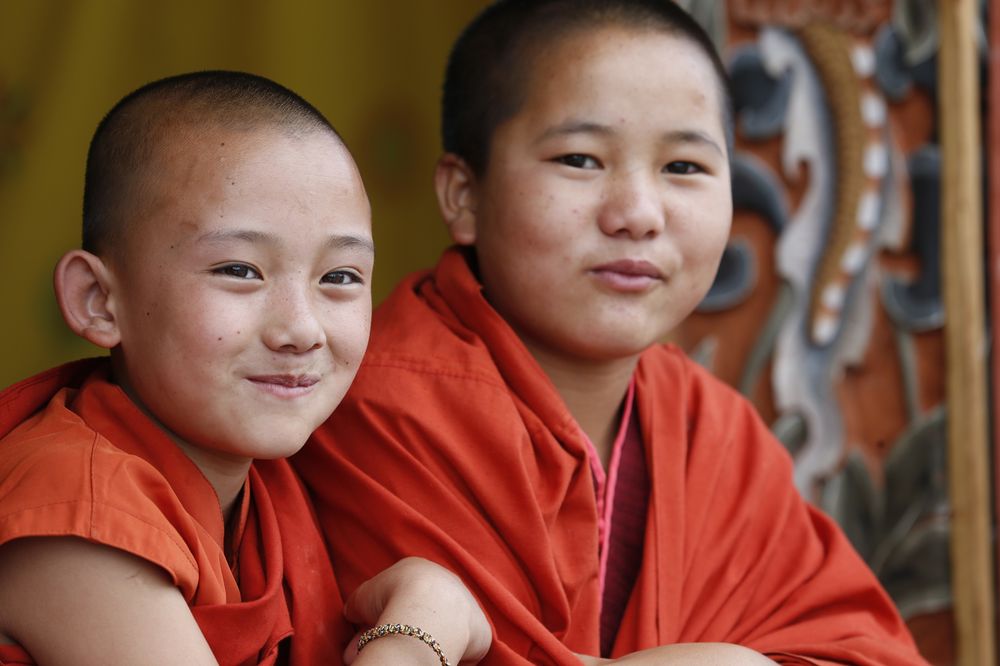
These trips are timed around real events — festivals, harvests, weaving seasons — not built around a generic loop of sights. And sometimes culture is simply this: two young monks, caught mid-laugh outside a monastery, happy to have their photo taken.
Paro Tshechu Festival Tour
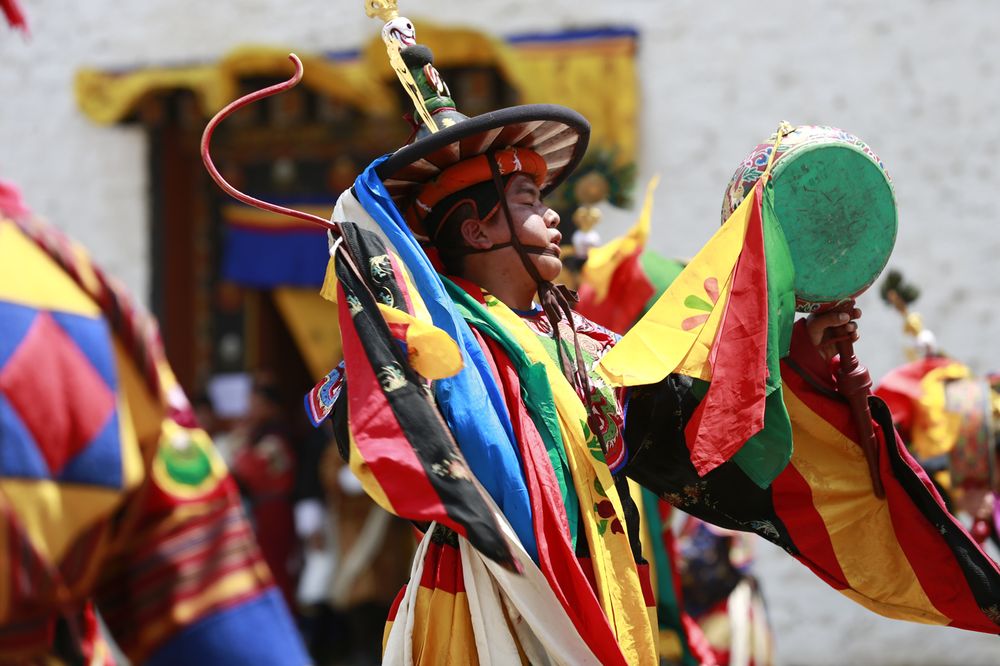
Front-row seats (arranged in advance) for the masked Cham dances, plus the pre-dawn unfurling of the giant Thongdrel scroll on the festival's final morning — a moment locals travel across the country to witness.
 Photo: Wikimedia Commons
Weavers of Bumthang & Trashiyangtse
Sit at the loom with master weavers producing Kishuthara textiles, and take a hands-on wood-turning lesson from artisans famous across Bhutan for their lacquered wooden bowls.
Dzong & Architecture Trail
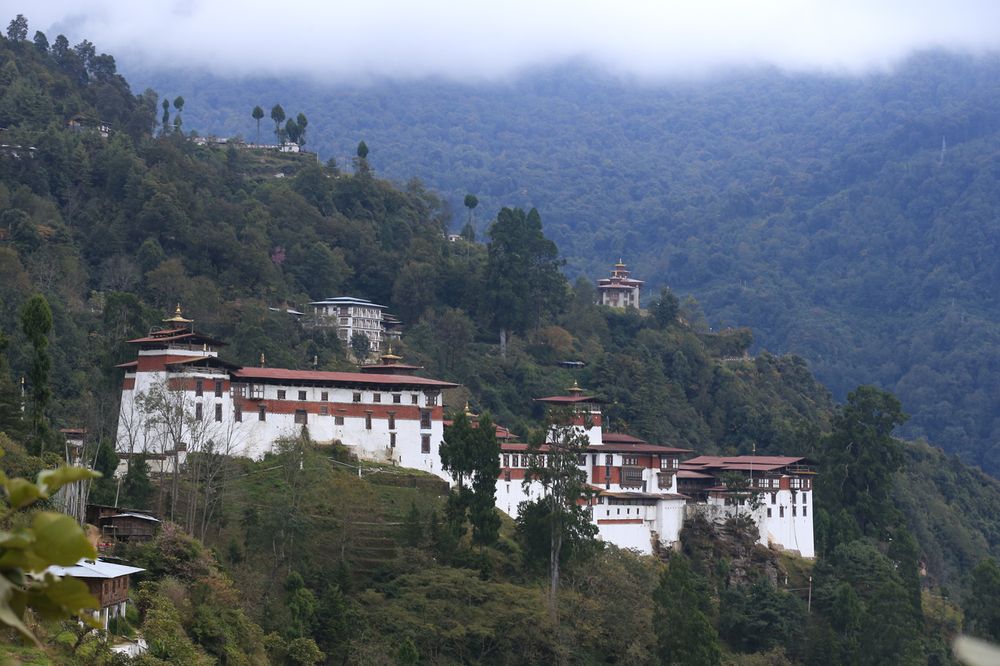
A focused tour for architecture and history lovers through Bhutan's fortress-monasteries, with a guide who was formerly part of a dzong restoration crew.
Come back with more than a suntan.
Bhutan's traditional medicine system, Sowa Rigpa, blends Tibetan, Ayurvedic and local herbal practice. These journeys pair a real consultation with rest — not a spa gimmick.
Sowa Rigpa Wellness Retreat
A pulse-and-urine diagnosis consultation with a traditional physician at the National Institute of Traditional Medicine, a personalised herbal formulation to take home, daily hot-stone baths, and a gentle daily walking program set to your fitness level.
Health-Check & Recovery Journeys
For travellers combining a medical procedure or check-up in the region with a genuine recovery period — we arrange low-altitude, low-exertion itineraries, dietary coordination, and a private nurse-companion on request.
71% forest cover, and a constitution that keeps it that way.
Bhutan is the world's only carbon-negative country. These trips put you inside that fact — in crane valleys, red panda forest, and rivers still clean enough to drink from.
 Photo: Wikimedia Commons
Gangtey Crane Valley & Hot Stone Retreat
Endangered black-necked cranes winter in Gangtey's glacial valley from November to March; a visit to the Black-Necked Crane Information Centre with a resident conservation officer, then a forest-bathing walk and a night of traditional hot-stone bathing.
 Photo: Shiv Kumar, CC BY-SA 4.0, via Wikimedia Commons
Red Panda & Birding Expedition
A citizen-science-style expedition through temperate forest with a wildlife biologist guide, tracking red panda signs and logging sightings for over 20 recorded bird species per day in peak season, including the rare Himalayan monal.